Automation is paying off for suppliers, but data and skills will decide how far it goes: Study
For logistics teams, the bigger questions are where suppliers will invest, how well their systems connect and who will run them.
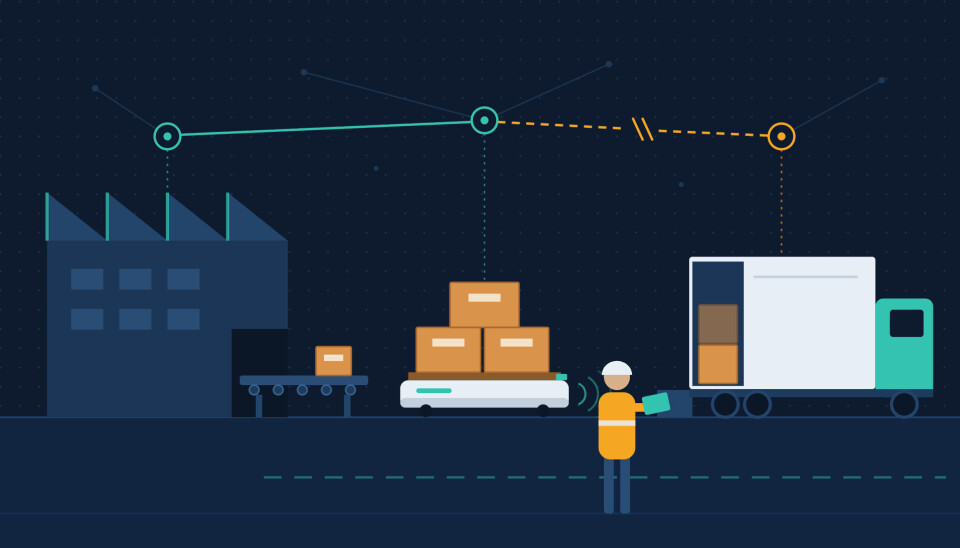
AI image
Most automotive suppliers are seeing returns from automation and investing closer to their customers, according to a new MEMA and AlixPartners study. But disconnected plant data and a shortage of skilled workers are limiting the gains, with knock-on effects for the logistics networks that link suppliers to vehicle plants.
Automation is delivering for automotive suppliers, but most are not yet getting its full value. That was the main finding of a new study by MEMA Original Equipment Suppliers and consultancy AlixPartners, which points to skills shortages and disconnected data systems as the biggest brakes on progress.
The study found that 85% of suppliers report a positive financial impact from automation, and 76% are testing automation or expanding its use.
The returns match what logistics leaders have described on stage at the Automotive Logistics conferences this year. At ALSC Mexico this month, Bernardo Múzquiz Pezino, finished vehicle logistics senior group manager at General Motors de México, said his team had automated the equivalent of 1,400 hours of manual work so far in 2026.
For logistics teams, the bigger questions are where suppliers will invest, how well their systems connect and who will run them.
Investment is moving closer to the customer
According to the study, 79% of suppliers plan new capital investment in US manufacturing over the next three years, and 52% have taken, or formally decided to take, steps to qualify new regional suppliers within 18 months.
"Suppliers are investing in North America to get closer to their customers and compete globally," said Collin Shaw, president of MEMA Original Equipment Suppliers. "Those investments depend on people. Workers need the skills to operate new equipment, keep it running and find ways to make it work better. Training has to be part of the investment from the start."
For logistics, that means new lanes, new supplier sites to onboard and new inbound flows to plan, often on tight timelines. When Nissan consolidated production at Aguascalientes, its team created 13 new docks, brought four new suppliers into the plant within six months and integrated around 190 suppliers across four regions.
The data problem starts upstream
Systems integration was the factor most often cited as limiting productivity gains from automation, named by 43% of respondents. And 71% said their plant data systems are only partially connected, operate in isolation or rely largely on manual processes.
That matters beyond the factory as the data a supplier plant creates i.e what was built, when it was packed, what is on the truck is the data inbound logistics runs on. When plant systems are disconnected, problems surface downstream as wrong advance shipping notices (ASNs), missing serial numbers and manual corrections at the receiving dock.
"In any plant the first error point is going to be around the receipt," Patrick Bauer, vice-president of supply chain at IAC Group, said at ALSC Digital Strategies North America in June. "If you don't receive it properly, you're going to have errors throughout the facility."
"Manufacturers need to plan their facilities, technology and workforce together," said David Steinert, partner at AlixPartners.
Where supplier automation meets logistics
Much of the automation suppliers are adding sits in material flow rather than on the production line. Deloitte's commentary on MEMA's Q3 2025 supplier barometer listed warehouse automation, alongside robotic weld cells and AI-enabled inspection, among suppliers' success stories.
AGVs and AMRs are a big part of this, handling line-side delivery, kitting and moves between warehouse, line and dock. BMW, for example, runs more than 600 Smart Transport Robots across its network.
AMRs also change the skills a plant needs. In plant logistics, the question is no longer only whether there are enough people to move material, but whether there are enough people who understand the systems moving it.
Chris Smith, CEO and founder of truck-loading robot maker Slip Robotics, warned at ALSC Global against replacing people with machines one for one. "I think that usually sets yourself up for failure because then the second you have volatility, the second you have unpredictability, you now have lost your ROI," he said.
His advice was to judge projects on how quickly they pay back. "I think the challenge we typically have with automation is when the time between when I'm paying for this thing and when I actually get that initial benefit is too long," Smith said.
Additionally, robots on the plant floor depend on the same connected data as everything else, and replacing a manual route with a robot does not automatically improve it. "If we automate the exact same processes that you have today, it'll be effective, it'll be more automated, but it's not going to be optimised," said Josh Ewertz, automotive business development leader for North America at AMR provider Geek+, at ALSC Global.
Skills are the other bottleneck
In the MEMA study, 76% of respondents named the US among the regions where their companies face the most acute shortages of skilled-trades and automation talent. And 81% said their efforts to build automation skills have produced mixed results or are not working.
The same gap runs through logistics. In Automotive Logistics' Automotive Inbound Logistics Survey 2026, 26% of respondents named driver and labour shortages among the sector's leading challenges, and 28% said a lack of skills, training and understanding is one of the main constraints on digitalisation.
Some suppliers are building those skills inside the business rather than leaving them with IT. At ALSC Global, Nitin Sethi, vice president and head of IT at Autoliv Americas, described how the company provides a self-service platform and encourages "digital citizens" and "digital champions" in business and engineering teams to help validate the data being used.
"There has to be a human in the loop, and there has to be a clear accountability and ownership for training the data," he said.