DHL's new battery logistics hub Holtum, the Netherlands, is expected to be operational by early 2027DHL
The facility, which has 17,000 sq. m of storage and service space for high-voltage batteries, will handle batteries used both in electric vehicles and in battery energy storage systems (BESS), including home storage and solar energy applications.
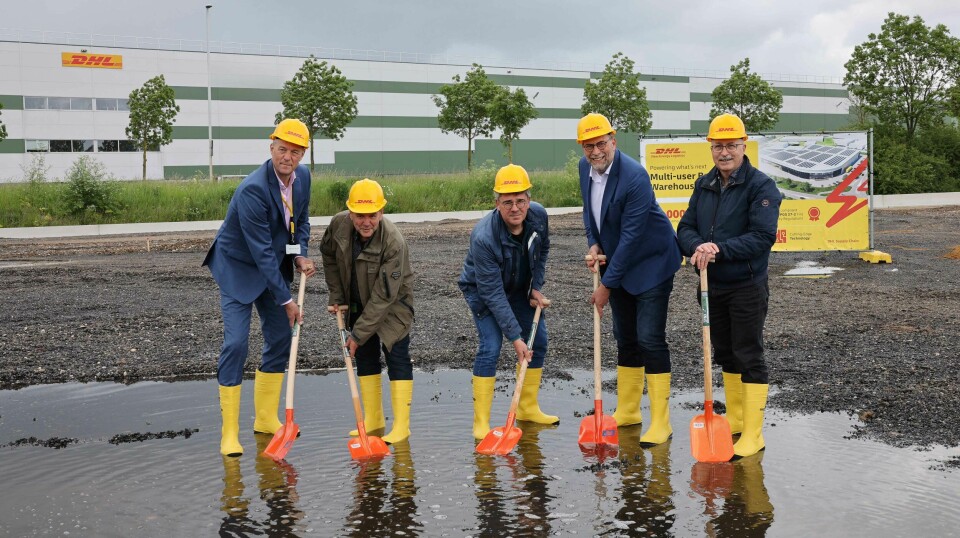
(L to R) Dirk van Houtum, DHL; Hans van de Winkel, Municipality Sittard-Geleen; Huub Menten, Municipality Sittard-Geleen; John Scherders, DHL; and Jan van de Berg, Municipality Sittard-GeleenDHL
It is located adjacent to DHL Supply Chain’s existing automotive site in Holtum, creating what the company has described as "a European campus for e-mobility and energy systems".
It is intended to serve European markets including the Netherlands, Germany and Belgium, with the logistics provider aiming to "develop into a central European gateway for EV and energy storage logistics".
With the groundbreaking ceremony having taken place at the end of May, DHL Supply Chain's Holtum battery logistics hub is expected to be operational by early 2027.
Advertisement
DHL Supply Chain identified "strong interest" from its automotive customers – alongside customers in the industrial and energy sectors – for safe, scalable and compliant logistics solutions for battery supply chains.
"The transformation of mobility and energy systems is a key driver of change in global supply chains," commented Rainer Haag, CEO of DHL Supply Chain Europe. "By expanding our battery logistics capabilities in Holtum and closely linking them with our existing automotive expertise on site, we are creating a scalable one stop shop solution for the EV sector."
He added that the investment supports the DHL Group Strategy 2030, a group-wide initiative to "accelerate sustainable growth". As part of this strategy, new energy was identified as one of five key areas in which DHL Supply Chain plans to invest and expand. As the renewable energy and auto-mobility sectors undergo rapid transformation, the company believes dedicated logistics solutions will be required, presenting significant growth potential.
According to DHL Supply Chain, its new facility is designed to support complex and highly regulated battery supply chains, as well as enabling a broad range of value added services, including: compliant storage of battery units; diagnostics and testing; charging and conditioning; refurbishment; reverse logistics; and preparation for recycling.
By combining logistics and technical services, DHL Supply Chain intends to use its Holtum campus to enable its customers to manage the full battery lifecycle efficiently while supporting circular supply chain models and more sustainable use of resources.
"For the Netherlands and the region around Holtum, this development reinforces the site's strategic importance as a logistics and new energy hub," said John Scherders, CEO of DHL Supply Chain Benelux. "By connecting the new battery operation with our existing automotive and spare parts site right next door, we are creating a centre of excellence that allows us to offer seamless logistics and technical services for electric mobility and energy storage customers across Europe."
Automotive's investments in batteries and energy
Advertisement
With the automotive industry moving towards electrification – albeit at a rate slower than initially anticipated – investment in EV battery infrastructure will be crucial.