APL Logistics connects carmakers with emerging markets in Asia
Finished vehicle logistics is critical to connecting a growing range of vehicle makers in China with expanding demand across the region.
Automotive LogisticsAutomotiveLogistics
Published
4 min
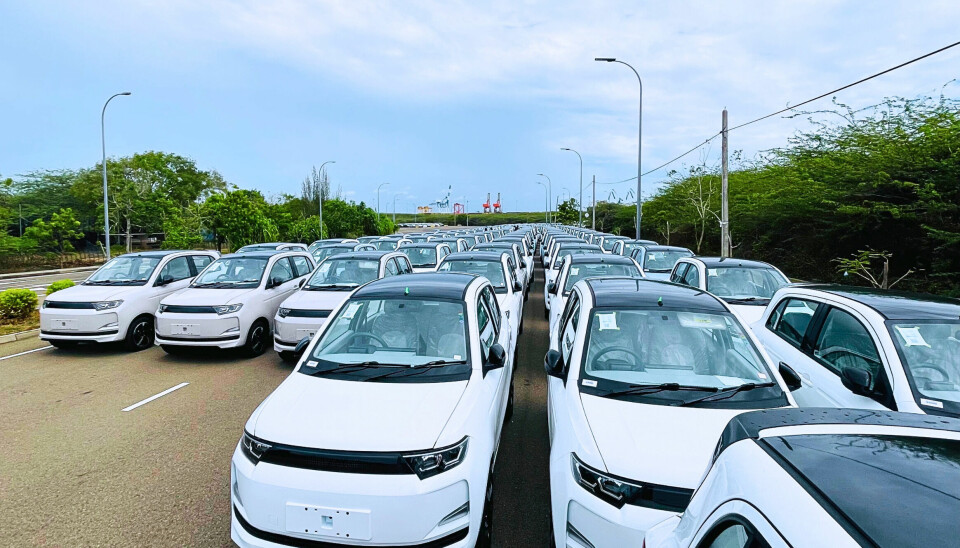
A fleet of brand-new cars await discharge at Hambantota portAPL Logistics
PARTNER CONTENT
This article was produced by Automotive Logistics in partnership with APL Logistics
Across Asia, demand for electric vehicles (EVs) is accelerating, but not always where supply is concentrated. As Chinese automotive manufacturers expand beyond their domestic market, a new challenge is emerging: how to efficiently connect a growing base of OEMs, particularly mid-sized players, with fragmented, fast-evolving import markets across the region. In this context, finished vehicle logistics is becoming a critical enabler of market access.
Bridging supply and fragmented demand
While established automotive exporters such as Japan and South Korea benefit from mature logistics ecosystems, many Chinese manufacturers are still building their international distribution networks.
At the same time, emerging markets across South and Southeast Asia are opening up to vehicle imports, often with complex regulations, high duties, and evolving compliance requirements.
The gap between supply and demand is therefore not just commercial—it is operational. Connecting the two requires logistics capabilities that combine regulatory expertise, flexible routing and strong local execution.
Sri Lanka: a market snapshot of a regional shift
Sri Lanka provides a clear example of how these dynamics are playing out in emerging markets across Asia.
Following the lifting of a five-year vehicle import ban in 2025, pent-up demand, particularly for EVs and hybrids, surged rapidly. However, the reopening of the market also exposed structural challenges.
Vehicle imports were subject to strict controls and multiple layers of taxation, with duties ranging as high as several times the vehicle’s value. At the same time, importers faced extensive documentation requirements and unfamiliar regulatory frameworks.
EVs on their long journey to the local marketAPL Logistics
A lack of experience with updated processes, including the use of letters of credit, led to delays and a backlog of thousands of vehicles at port. Compliance became a critical bottleneck, increasing both cost and operational risk.
In environments such as these, logistics providers including APL Logistics have needed to take on a more active role in coordinating stakeholders and supporting importers through unfamiliar regulatory processes, rather than simply executing transport.
As Luiz Spino, head of automotive in Asia at APL Logistics, explains: “We prioritised ensuring that imports are compliant. Additionally, we established strong partnerships with operators to guarantee a steady flow of passenger vehicles and buses from China, Indonesia and Thailand to auto dealers.”
Rashmin Fernando, head of business development at APL Logistics Lanka, adds: “What we’re seeing in markets like Sri Lanka reflects a broader regional shift, where demand is growing faster than the supporting import and distribution infrastructure.”
Redefining vehicle flows from China
Historically, finished vehicle flows into markets like Sri Lanka have been dominated by Japan-origin trade lanes.
However, the rapid rise of Chinese EV exports is reshaping these patterns, creating demand for new logistics networks originating from Chinese ports into South Asia and beyond.
Responding to this shift requires more than capacity, it requires coordination across shippers, carriers, ports, customs authorities and inland distribution networks.
In markets such as Sri Lanka, supported by APL Logistics, new ro-ro services from Chinese ports have been introduced to complement established Japan-origin routes, enabling a broader range of vehicles, from compact EVs to premium models and buses, to reach the market.
From execution to market enablement
As these new flows emerge, the role of the logistics provider is also evolving. Beyond transport, providers are increasingly required to act as orchestrators, ensuring compliance, enabling market entry and supporting importers through complex regulatory environments. Leading providers such as APL Logistics are already supporting OEMs and distributors in this expanded role across Asia, combining global network capabilities with local regulatory and operational expertise.
This expanded role typically includes:
Navigating documentation and customs requirements
Ensuring compliance to avoid penalties or re-export risks
Coordinating port handling, inland delivery and dealer distribution
Supporting importers with limited experience in new regulatory regimes
For many mid-sized OEMs, particularly those entering new markets for the first time, these capabilities are critical to scaling beyond their domestic footprint.
Modern Chinese buses lined up and ready for deliveryAPL Logistics
A broader regional opportunity
The dynamics seen in Sri Lanka are not unique. Across markets such as Vietnam, Indonesia, Thailand and parts of the Middle East, demand for competitively priced EVs is rising, while import ecosystems remain fragmented and operationally complex.
For OEMs, success in these markets increasingly depends on the ability to combine product competitiveness with reliable, compliant and scalable logistics solutions supported by partners capable of navigating both regional networks and local market requirements.
The growing importance of visibility
As vehicle volumes increase and supply chains become more intricate, visibility is also becoming a key differentiator.
End-to-end tracking at the vehicle level, such as VIN-based visibility, allows stakeholders to monitor progress across origin, transit and destination, improving planning accuracy and reducing delays. In practice, logistics providers, including APL Logistics, are implementing such capabilities to provide greater transparency and control across increasingly complex distribution networks.
In markets where regulatory scrutiny is high and turnaround times are critical, this level of visibility helps mitigate risk and enhances operational efficiency.
Looking ahead
As Chinese OEMs continue expanding across Asia and into adjacent regions, finished vehicle logistics will play an increasingly central role in shaping market access.
The ability to bridge global manufacturing hubs with diverse and complex local markets, while supporting mid-sized manufacturers in scaling internationally, will define the next phase of growth in the automotive sector.
In this evolving landscape, logistics is no longer just a function of distribution. It is a strategic enabler of market expansion, and providers such as APL Logistics are positioned to support this shift by connecting global supply with emerging market demand through flexible, compliant and scalable solutions.
About Luiz Spino
Luiz Spino is the head of business development for automotive at APL Logistics Asia, bringing 15 years of experience in automotive logistics across two continents.
Based in Hong Kong, he collaborates with OEMs and dealers to design global finished vehicles distribution networks.
His expertise encompasses port and yard management, multimodal distribution and intercontinental logistics, with a focus on ro-ro and cars in containers.
About Rashmin Fernando
Rashmin Fernando is a professional with 12+ years of comprehensive experience bridging logistics and sales operations.
He demonstrates a proven track record of optimising supply chain efficiency while driving revenue growth through strategic client relationships.
His expertise lies in translating complex logistical solutions into tangible business value for customers across a diverse range of industries.