Autonomous logistics project at Port of Tyne aims to address labour shortages and improve automotive supply chain resilience
The North East Automotive Alliance (NEAA), alongside the Port of Tyne, Oxa and a consortium of industry partners, has delivered the Port‑Connected and Automated Logistics (P-CAL) project, an initiative deploying a fully autonomous terminal tractor at the port in the North East of England. NEAA's project manager for the initiative told Automotive Logistics how it is benefitting the region's automotive sector and what's next for the project.
An autonomous terminal tractor is used to move containers at the Port of TyneNEAA
Supported by the UK government's Connected and Automated Mobility (CAM) Pathfinder programme, the £4 million project marks a UK-first as a fully autonomous terminal tractor and secure mesh communication network has been deployed to move containers between the dockside and the container compound.
It brings the NEAA together with organisations like automaker Nissan, logistics provider Vantec, autonomous vehicle specialist Oxa and more with the ambition to demonstrate a "scalable, safe and commercially viable" autonomous logistics solution that supports the UK’s net zero goals while enhancing efficiency and safety.
Live loads were fully autonomously delivered from Vantec to Nissan Motor Manufacturing UK's (NMUK) in Sunderland without intervention by a safety driver.
The P-CAL initiative was launched in August 2025 and ran over a period of nine months, with the NEAA officially announcing its successful delivery on April 21, 2026.
Advertisement
“P‑CAL represents a defining moment in the North East’s journey from pilot projects to real‑world autonomous operations," commented Paul Butler, CEO of the NEAA. "This project has demonstrated not only technical capability, but the strength of collaboration across industry, academia and government."
Automated finished vehicle logistics
While the P‑CAL trial at the Port of Tyne is focused specifically on container movements, finished vehicle movements are part of the wider programme.
"In a previous project delivered on a private road network in Sunderland, we demonstrated a proof of concept for moving finished vehicles using a similar style of terminal tractor coupled to a standard car transporter trailer," explained the NEAA's innovation manager, Chris Appleby. "That work confirmed technical feasibility, but it remains a proof of concept rather than a live commercial deployment."
Over time, Appleby explained that the ambition is to bring these use cases together, enabling the movement of containers and finished vehicles between ports, manufacturing facilities and nearby suppliers. Before this though, the regulatory, operational and commercial conditions must allow it.
Implications for automotive logistics
To find out more about what the P-CAL project means for the automotive sector in the North East of England, Automotive Logistics spoke to Chris Appleby, innovation manager at the NEAA and P-CAL project manager.
Chris Appleby, innovation manager at the NEAANEAA
“The most significant benefit is improved resilience across the automotive supply chain," he explained. "Driver availability is a long‑standing issue, and the age profile of HGV drivers in the North East continues to rise, with fewer new drivers coming into the industry. Autonomous logistics provides a way to support the existing workforce by taking on repetitive, time‑critical or higher‑risk movements within controlled environments."
Appleby noted that tackling driver shortages head-on with this autonomous logistics trial delivers a number of benefits for automotive supply chains in the region. These include more predictable operations, additional capacity during peak periods and reduced exposure to labour disruption.
"Logistics remains heavily exposed to driver shortages, and that is a growing structural risk rather than a short‑term issue," he added. "P‑CAL demonstrates how autonomous systems can operate safely in controlled environments such as ports, where journeys are repetitive but operational demands are high."
Beyond workforce availability, the P-CAL project seeks to address other pressures currently facing the industry, including around safety, cost and reliability. "Removing people from high‑risk areas, improving consistency of movement and enabling round‑the‑clock operations all help tackle the underlying challenges facing modern logistics operations,” Appleby said.
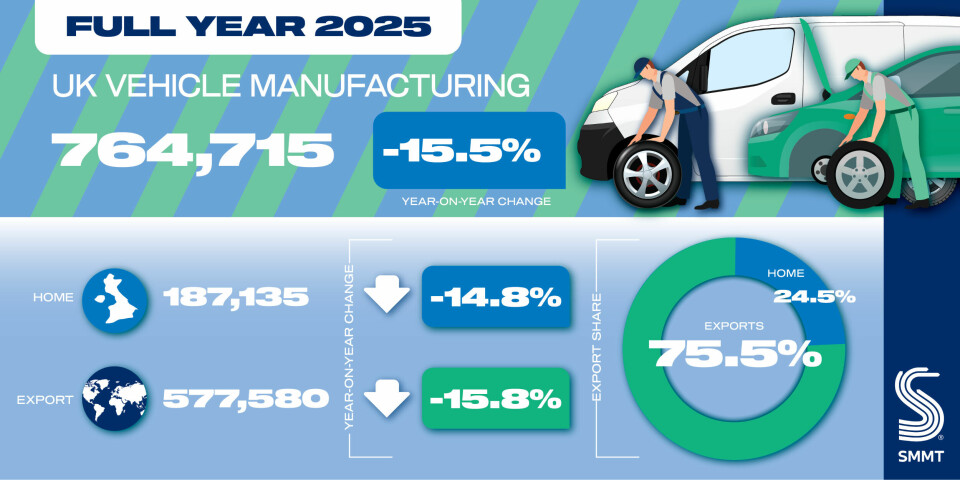
Earlier this year, Mike Hawes, chief executive of the Society of Motor Manufacturers and Traders (SMMT), told Automotive Logistics that attracting foreign investment in UK vehicle production – particularly from Chinese OEMs – is critical to reach the UK government's target of producing 1.3 million units per year, as outlined in its Industrial Strategy.
Advertisement
Speaking to Automotive Logistics about how projects like this one at the Port of Tyne could potentially attract more automakers to manufacture vehicles in the UK, and in the North East specifically, Appleby said: "The North East already offers a strong manufacturing base, a highly productive workforce and a dense supplier network. Projects like P‑CAL strengthen the enabling infrastructure around that base, particularly in logistics, automation and digitalisation."
He added that being able to demonstrate advanced, secure and scalable logistics capability sends a strong signal to investors that the region is not only a place to manufacture vehicles, but also a place to innovate, trial and operate next‑generation industrial systems.
"That combination is becoming increasingly important when future automotive investment decisions are made," Appleby shared.
With the project drawing to a close, the outcomes and learnings from the initiative will be used to shape future CAM initiatives, investment opportunities and policy development, both regionally and nationally.
"The immediate next step is to explore what a scaled deployment at the Port of Tyne could look like, potentially involving multiple autonomous vehicles operating as part of live port operations," explained Appleby.
He shared his perspective that, beyond the port, the real value of the P‑CAL project lies in its transferability. "The same technologies and operating models can be applied to other logistics hubs, industrial estates and distribution centres around the UK," he said. "Over time, this creates a clear pathway from controlled environments to more complex deployments, supporting the wider adoption of connected and automated logistics nationally."