Stellantis and Leapmotor's LPMI joint venture expands logistics partnership with Grimaldi Group, supporting plans for growth in Europe
Leapmotor International (LPMI), a joint venture between Stellantis and Leapmotor, has announced the continued expansion of its logistics partnership with the Grimaldi Group as it targets full-scale European production at two sites in Spain.
Together, LPMI and Grimaldi Group have successfully delivered nearly 100,000 vehicles from China to Europe in the past 18 monthsStellantis
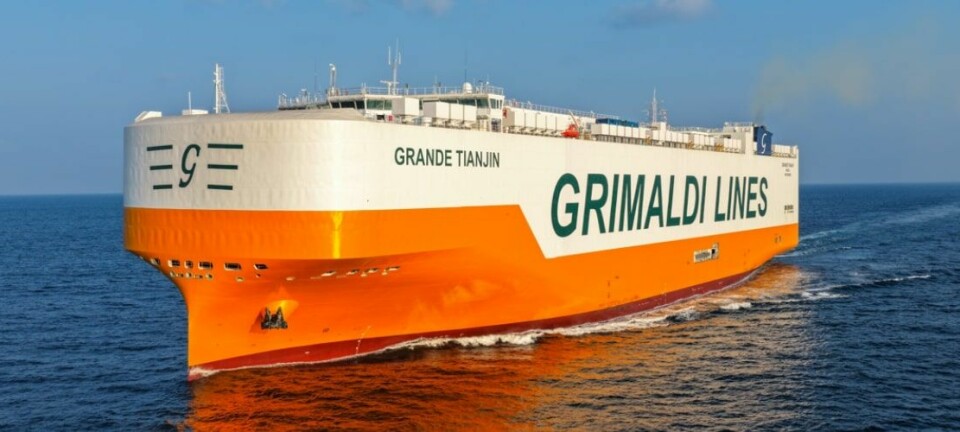
Grimaldi Group has been a partner of Leapmotor since 2022, initially providing 22,500 CEU of secure vehicle handling capacity each month from Asia to Europe. In August 2025, the two companies strengthened their partnership when Grimaldi Group deployed its latest vessel – the 9,241 CEU Grande Tianjin – on its East Asia-Northern Europe service carrying, amongst other Leapmotor vehicles, 1,000 new electric SUVs.
European ports of entry
The 15 sailings conducted by Grimaldi Group to transport Leapmotor vehicles connected China with several European points of entry:
Antwerp, Belgium
Civitavecchia, Italy
Gioia Tauro, Italy
Livorno, Italy
Portbury, UK
Setubal, Portugal
Valencia, Spain
Vigo, Spain
In the past 18 months, almost 100,000 Leapmotor vehicles have been shipped from China to Europe on board Grimaldi Group vessels, including more than 20,000 units to the Italian market from January to March 2026.
During the first quarter of the year, Grimaldi Group completed 15 sailings between China and several European ports including in Italy, Spain, Portugal, Belgium and the UK.
Stellantis has said this programme "highlights Leapmotor International’s capability to design and manage complex, large-scale supply chains, delivering fully integrated end-to-end logistics solutions in partnership with the Grimaldi Group".
It highlighted LPMI’s "advanced logistics design and orchestration capability" as key to enabling the joint venture to manage increasing volumes and operational complexity, identifying three core pillars at the heart of the initiative.
The first pillar it acknowledged was end-to-end supply chain planning and synchronisation. By closely aligning production of Leapmotor vehicles in China with maritime capacity and terminal availability, Stellantis explained that LPMI can effectively respond to strong market demand and strengthen its position within the Stellantis ecosystem.
The second pillar it identified was integrated supply chain coordination. Through the coordination of maritime and inland operations, Stellantis said LPMI can ensure rapid vehicle flows through European ports, handling peak volumes in excess of 5,400 units per vessel call. To achieve this, Stellantis recognised that close collaboration between all stakeholders – shipping carriers, terminal operators, road transport providers and customs authorities – is critical to maintaining efficiency and reliability.
And the third and final core pillar of the initiative Stellantis drew attention too was operational discipline and continuous improvement. Through detailed planning processes and continuously optimising these processes, LPMI can enhance operational efficiency across the entire logistics chain and ensure consistent performance.
“Logistics is a key differentiator and a strategic lever for competitiveness in the modern automotive sector,” stated Alessandro Furnò, LPMI's vice president of global supply chain and purchasing. “Our ability to lead such a complex ecosystem – supported by a trusted partner like the Grimaldi Group – is a cornerstone of our commercial success."
He added: "This partnership ensures that our logistics capabilities evolve as fast as our technology, securing our momentum in the European market.”
Advertisement
How Grimaldi Group's maritime fleet supports sustainable shipping targets
In addition to the aforementioned Grande Tianjin, the programme makes use of several other vessels in Grimaldi Group’s next-generation fleet of pure car and truck carriers (PCTCs), including the Grande Svezia, Grande Michigan and Grande Istanbul.
Each of these PCTCs boasts more than 9,000 CEU capacities and are ammonia-ready, meaning that in the future, they can be converted to use ammonia as a zero-carbon alternative fuel.
It is hoped that this move will support the logistics firm in its ambition to reduce the carbon footprint of global vehicle transportation as well as the wider maritime sector’s goal of reaching net zero by 2050.
The deployment of its Grande Tianjin vessel in August 2025 was the first of 17 ammonia-ready PCTC vessels ordered by the Grimaldi Group to be delivered from shipyards in China. Rollout of these vessels will continue throughout the year up to 2027.
Grimaldi Group unveiled the ammonia-ready Grande Tianjin in August 2025Grimaldi Group
As well as its significant investment in ammonia-ready vessels, Grimaldi Group has invested heavily in port infrastructure, which the partnership with LPMI is set to benefit from. Stellantis has said that Grimaldi Group's key hubs in Italy and across Europe "play a central role in supporting the operation".
Spanning nearly 6 million sq. m of equipped port areas, Stellantis claimed that these facilities "enable highly efficient and streamlined vehicle handling processes", including preparation, maintenance and battery charging.
“We are proud to support Leapmotor International during this transformative phase of their European expansion,” said Luigi Pacella Grimaldi, automotive intercontinental director of the Grimaldi Group. “This is more than a service agreement; it is a long-term partnership built on trust and shared execution. We remain committed to providing the scalable, tailored logistics solutions necessary as LPMI’s volumes continue to reach new heights.”