Circularity, compliance and cost optimisation: How the right packaging strategy can support the ambitions of the automotive supply chain
Packaging was an aspect of the automotive supply chain that was explored in depth at Automotive Logistics and Supply Chain Europe 2026. During the conference, experts from OEMs and packaging providers engaged in discussions identifying the biggest challenges in packaging today, but also the opportunities packaging can bring to help companies decarbonise their operations, comply with new regulation and improve cost efficiency.
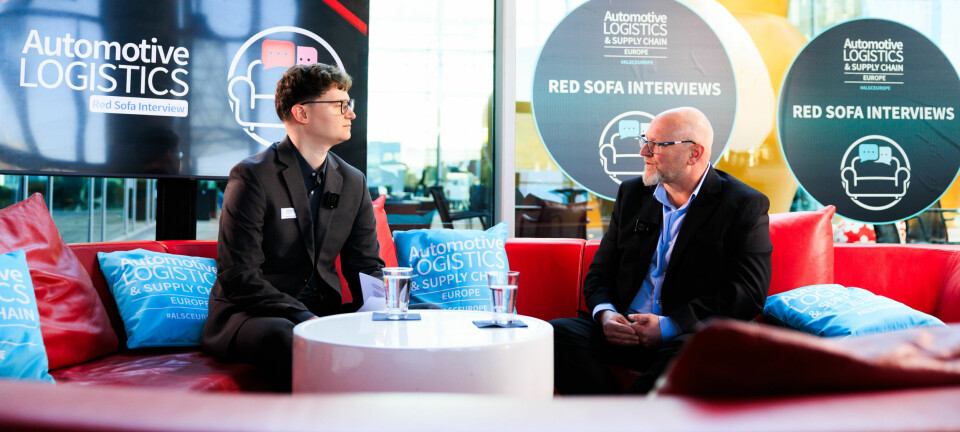
(L to R) Philip Bittermann, Neue Verpackung; Mattias Piekarczyk, BOX ID; Jonathan Shepard, JLR; Chay Ankers, DS SmithALSC Europe 2026
ALSC Europe 2026 saw the debut of the first conference stream dedicated to packaging in the automotive supply chain, and within these sessions one message resonated throughout: packaging is finally being recognised as the strategic lever it is and the opportunities for end-to-end gains that it can provide.
A shifting view of packaging in the wider supply chain
Over the past decade or so, packaging has gone from something OEMs barely considered so long as parts arrived undamaged to something they will look to optimise from a range of angles, even shaping the design of parts to maximise efficiency.
Jonathan Shepard, senior packaging manager at JLR, explained that 15 years ago, before his time at JLR, packaging was developed largely around an OEM's tier one suppliers and ensuring parts arrive to the assembly line.
Advertisement
This started to change when there became an increasing focus on reducing cost and after that there was a realisation that packaging has the potential to impact – both positively and detrimentally – areas such as cost, quality, delivery, safety and environmental impact.
"Packaging has so many touchpoints through the supply chain that it can actually impact each one of those areas," he said.
Jonathan Shepard, senior packaging manager at JLR, discussed how attitudes towards packaging have changed in recent yearsALSC Europe
He shared his belief that packaging can "bring efficiencies and transformation in those areas", especially where we're seeing more and more automation in the manufacturing process.
"I think in the next two to three years there's going to be an increased need for stronger and more robust packaging and what that does for each touchpoint," he added.
As design-for-packaging strategies become more popular for new vehicle launches, encouraging design and purchasing teams to consider packaging and logistics sooner has become a critical task.
"I'm a realist – I know we can't design our products and our car around packaging as much as we'd like, but I think at that point there's potential mutual benefit and gain between us and the designers in having that early interaction," Shepard said.
Andy Winebloom, senior manager at Toyota Motor Europe, explained that when Toyota's Packaging Shared System team was first established, engaging with design proved difficult.
"We were looking just at what the packaging benefit was and not the whole picture of the supply chain, the product cost, and the cost to the supplier and to our manufacturing processes," he said.
Advertisement
"We were also getting involved much too late after the parts had been designed," he added. "We're now getting involved right at the very early stages and we've got a few wins under our belt."
As testament to how far Toyota's packaging team has come in this regard, Winebloom shared that the design team had recently approached him for his input on reducing product cost, keen to hear any ideas the packaging team might have for addressing this challenge.
While this example has shown a high level of collaboration between a packaging team and design team within an OEM, Francesco Mannocchi, head of product management and application engineering for Europe at MetPro Group, pointed out that this is not the case for all OEMs and tier suppliers.
He noted that most OEMs and tier suppliers still face cost pressures, complex parts and regulatory challenges that make buyers cautious about adopting new packaging innovations. "The key is to collaborate right from the start and to find experts that are open to working with us right from the start," he said.
Packaging standardisation
As cost and efficiency improvements continue to be valuable currency in today's supply chains, standardisation is a strategy that more and more companies are exploring. JLR's Shepard shared that he is very much on the side of standardisation. "I believe that brings benefits – certainly from the inbound side of things – to the line because you have all of those regular touch points... everybody needs to know what's coming and plan for it accordingly," he said.
Shepard explained that JLR's strategy focuses on standardisation through lease packaging, special packaging and expendable packaging. However, he noted flexibility is vital for these kinds of strategies, explaining that forcing standardisation where it is not appropriate can lead to unnecessary constraints, as some parts will inevitably require non-standard packaging.
"Standardisation is good, it's predictable, it's what we need, it helps intermodal transport, but we need that level of flexibility as well," he said.
Advertisement
Toyota's Winebloom shared a similar sentiment. "Our mantra is 'one part, one packaging design, one packaging maker' – that's my dream, but it's not always possible," Winebloom said. "There are definite reasons for having differences, but our goal is to try and eliminate as many of those as possible."
And as Emrah Özgen, chief operating officer at Tri-Wall EMEA, acknowledged, standardisation can bring about significant benefits in terms of cost and scalability, but it is not a panacea and there are challenges (such as distances between suppliers and OEMs) that will always need to be addressed.
"What Toyota did, making a central team, this requires a commitment from the management, and when you don't have that, it's really hard to standardise," Özgen said.
In each session within the packaging stream at ALSC Europe 2026, the EU's Packaging and Packaging Waste Regulation (PPWR) crept into the conversation – a topic that is clearly front-of-mid for those involved in packaging, whether at an OEM, a tier supplier, or a logistics/packaging provider.
"We don't underestimate the impact of PPWR and what's coming," said JLR's Shepard. "We know in August it's going to be be a binding regulation that we have to adhere to."
He continued: "I think we understand the objectives of it with regards to recycled content minimisation, optimisation, transparency on data. So right now I'm not losing much sleep over it because we already have a strategy that supports a lot of that activity."
Chay Ankers, automotive business unit director at DS Smith Packaging, emphasised that for packaging providers, this regulation could provide an opportunity for firms to rethink their approach to packaging.
"Yes, there's a need for everybody to be compliant and to be able to have everything ready for the deadlines," he said. "But I think the offshoot of that is there's a lot of opportunity to, take another look at things that have been into the supply chain and have been used in the supply chain for the last 20-25 years, and this is the time to start pushing and see if they can be changed to allow some of the goals of PPWR to be delivered."
But as well as opportunities, the PPWR brings with it plenty of challenges. One of these challenges is uncertainty around the legislation. While the intentions of the PPWR seem clear to all in the sector, it's the implementation in practise where there is some confusion.
Toyota's Winebloom gave an example of one such area where what the PPWR requires seems to – in its current state – contradict its ambitions. He explained how the PPWR's requirement of 35% recycled material within packaging from 2030 will mandate that companies use less virgin material in packaging, but as recycled content has different structural properties to virgin material, more overall material will be needed to maintain the structural integrity of the box.
There are some boxes that we've tried to increase the recycled content of and we can't have anything other than virgin material, so what we'd have to do if we incorporated that amount of recycled content is change the design of the box and maybe increase the amount of material," he explained. "Because of that, the weight of the box would increase, which then we may have to put less parts in, which is counterintuitive and counterproductive to what the legislation is trying to achieve."
So there are both challenges and opportunities to come surrounding PPWR compliance, but companies might first have to focus on understanding the legislation and overcoming the inevitable challenges before the full value of the potential opportunities can be realised.
Tips for ensuring PPWR readiness
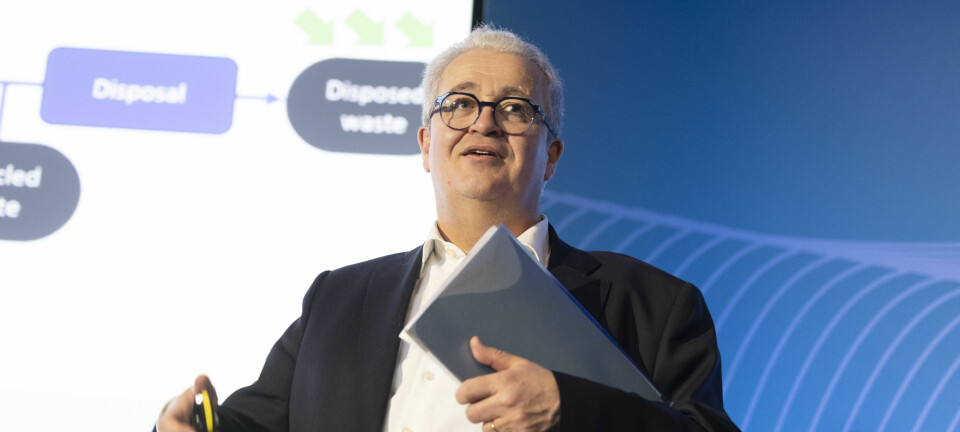
Eric Lambert, managing director of GALIA and chairman of Odette unpacked the latest European packaging regulationsALSC Europe 2026
At the conference, Eric Lambert, managing director of GALIA and chairman of Odette, shared some top tips for companies as they prepare for PPWR compliance:
Review current and future packaging designs
Reduce packaging material as much as possible
Set up reusable solutions as much as possible
Ban non-recyclable materials or solutions that are difficult to recycle
Keep an eye out for best practise guidelines issued by associations in Europe