BMW Group partners with PreZero to advance circular economy principles
Through a recently announced partnership, BMW Group will work with international circular economy company PreZero to enhance the circularity of the automaker’s business model for the recycling of end-of-life vehicles.
Through its collaboration with PreZero, BMW Group hopes extend the lifespan of components and recover more high-quality recycled materialsBMW Group
BMW Group signed a strategic cooperation agreement with
PreZero, part of Schwarz Group, to substantially advance the circular economy
across the European automotive industry. The signing took place at the Innovation
Park Artificial Intelligence (IPAI) campus in Heilbronn, Germany – an international
location for more than 5,000 people working on the development and application of
artificial intelligence.
Through the collaboration, BMW Group aims to “develop a
business model for the recycling of end-of-life vehicles, creating a closed
loop for both materials and recycling”.
Two birds with one stone
BMW Group’s motivation for this initiative is twofold:
firstly to support its sustainability ambitions, with “increasing the
proportion of secondary materials in [BMW Group] products wherever reasonable
and possible” a key goal for the group; and secondly to address current
challenges in the automotive industry by reducing its dependence on external
parties for raw materials.
Advertisement
This joint initiative is expected develop a viable business
model for an innovative materials and recycling loop, systematically using
end-of-life vehicles as a strategic source of materials. BMW Group believes
that by establishing such a business model, it can make its supply chain more
resilient and less vulnerable to supply shocks.
Initially, it will focus on extending the life cycle of
vehicle components by keeping them in the loop as long as possible through
continued use. Following on from that, the two companies are set to work
together on creating innovative recycling processes that can recover more
high-quality recycled materials such as steel, aluminium, plastics and battery
raw materials.
In addition to sustainability and resiliency improvements,
the project also has the potential to deliver significant cost benefits if it
is able to reduce the levels primary raw materials needed going forward.
"The collaboration with PreZero is another milestone on
the road to establishing the circular economy as a genuine business model,”
commented Ralf Hattler, senior vice president of customer support and
aftersales at BMW Group. “For the BMW Group, circularity is already a central
element of our corporate strategy and a key driver of CO2 reduction
and resource efficiency.”
He added: “Together with PreZero, we are creating the
conditions needed to design a vehicle’s entire value chain in a way that keeps
materials and components of the highest quality in the loop for as long as
possible. Our goal is to significantly reduce the need for primary materials
and make supply chains more resilient.”
A strategic move for PreZero
For PreZero, this latest move follows its acquisition of Re.Lion.Bat.
Circular in September 2025. Launched as joint venture between mobility
specialist LUEG and waste disposal specialist DEPPE Group, Re.Lion.Bat.
Circular operates Europeʼs
largest recycling facility for lithium-ion batteries, located in Meppen, Lower
Saxony in Germany.
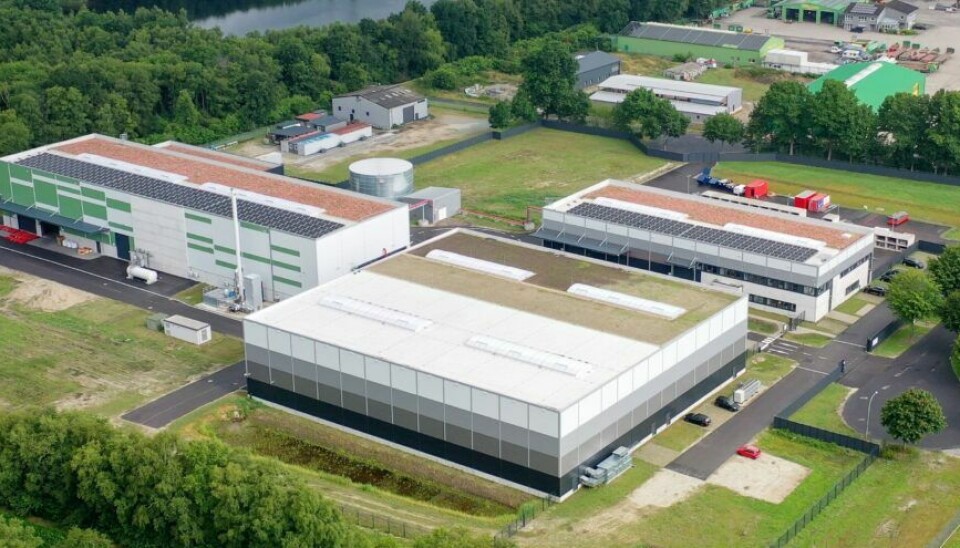
PreZero claims to operate the largest battery recycling plant in EuropePreZero
According to PreZero, the plant processes up to 30,000 tons
of used batteries each year, and a planned expansion would see annual capacity grow
to 60,000 tons.
Advertisement
“After acquiring Europe’s largest battery recycling facility
last year, we are now taking the next step with the BMW Group towards
establishing a functional circular economy in the automotive industry,” Carsten
Dülfer, CEO of PreZero in Germany. “Together, we are developing scalable
solutions that not only meet strict compliance and sustainability requirements
but also drive the decarbonisation of the industry across Europe. In this way,
we are closing the gap between automotive development and the realities of
recycling.”
To achieve its goal of delivering a business model that will
ensure comprehensive recycling of end-of-life vehicles, BMW Group has
acknowledged that knowledge transfer will have a significant role to play.
BMW Group will share its “design for recycling” knowhow and
insights gained from the recycling of end-of-life vehicles at its in-house
Recycling and Dismantling Centre (RDC), as well as materials and manufacturing
expertise.
Meanwhile, PreZero will share its knowledge of European
material flows and sorting technologies, in addition to its expertise in
battery recycling.