Baltimore FVL vessels re-route to New York, Norfolk and Philadelphia
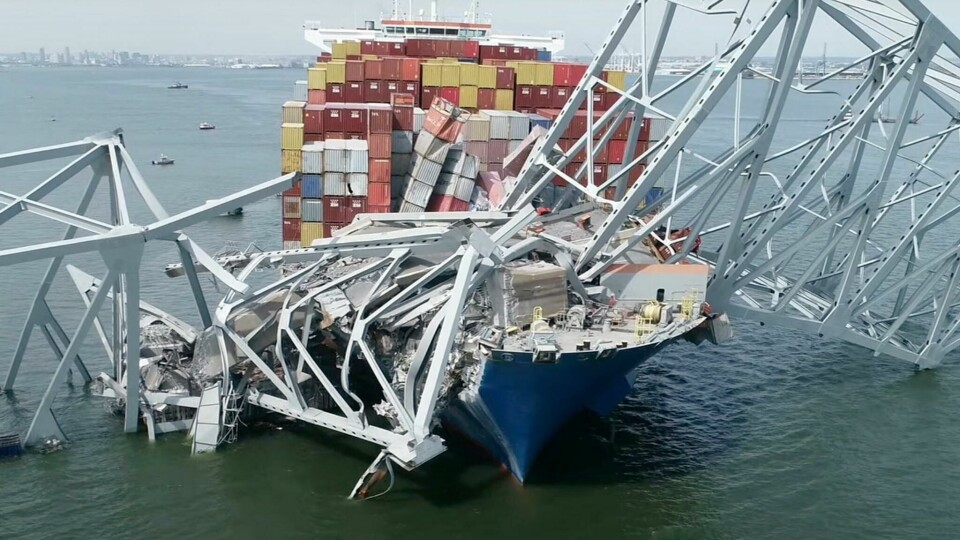
Vessels that had been bound for Baltimore port have started to re-route after the cargo vessel Deli collapsed the Francis Scott Key Baltimore bridge in Maryland.
The Francis Scott Key bridge collapsed on 26 March. (Credit: NTSB via AP)
Most of these vessels have been re-routed to New York, according to Mirko Woitzik, global director of intelligence, Everstream Analytics. He said that container ships and vehicle carriers expected to call at the Baltimore port in the next four days have diverted to New York, while others are headed for Norfolk or Philadelphia.
Woitzik added: “The majority of bulk and vehicle carriers still hasn’t been re-routed or will continue to call at accessible vehicle handling terminals in Baltimore.”
The unexpected diversions and constrained capacity could cause bottlenecks in the supply chain, adding to constraints on labour, equipment handling and trucking availability.
Advertisement
“This is especially the case for vehicles that need specialist equipment and dockworkers to handle the cars,” Woitzik said.
Patrick Lepperhoff, principal at Inverto, part of Boston Consulting Group, said the blockade of the port will have “little impact” on vessels moving between the USA and Europe, but agreed with Woitzik that the New York and Norfolk ports are likely to see an influx of vessels. However, Lepperhoff believes that the diversion ports will be fit to handle the extra demand.
“In the last quarter of 2023, around 260,000 standard containers were loaded and unloaded at the port,” he said. “This volume can be diverted to the neighbouring ports of New York and Norfolk. For these ports, this means around 10% higher volumes, and the harbours should have this capacity.”