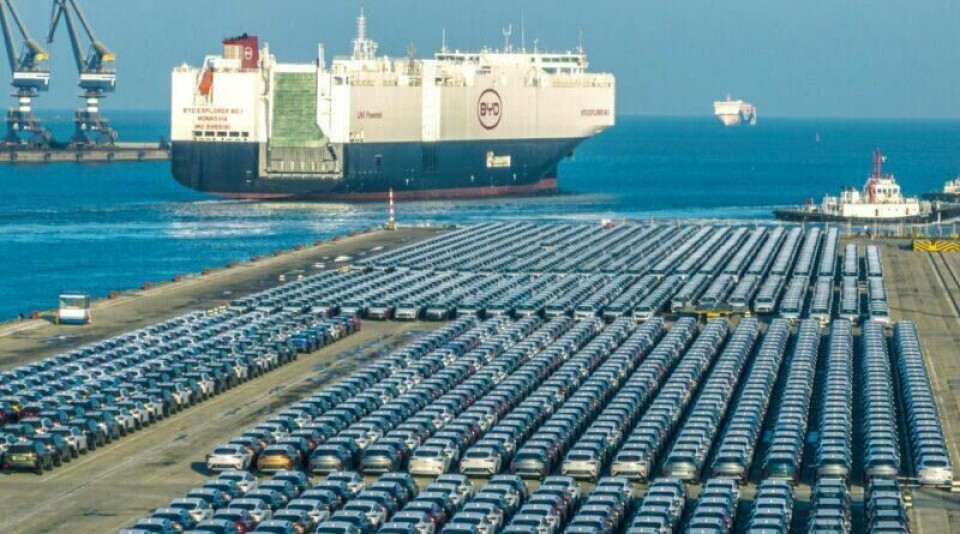
BYD and other Chinese OEMs accelerate vertical integration with dedicated ro-ro fleets for global vehicle exports
Chinese OEM BYD has added a new vessel to its fleet, with the BYD Shenzhen ro-ro car carrier having undocked earlier this month.
BYD’s Explorer No1 shipping vessel
The ship, which has a capacity of 9,200 vehicles, will reportedly be one of at least eight vessels that the carmaker aims to own or charter within the next two years. In February last year, BYD’s first own chartered car carrier, the Explorer No. 1, made its maiden voyage to Bremerhaven, Germany. BYD also has the BYD Hefei vessel and BYD Changzhou.
In Automotive Logistics’ recent livestream, Matthias Schmidt, European autos analyst at Schmidt Automotive Research said that he expects Chinese OEMs to navigate tariffs by shifting focus to European Union (EU) adjacent countries, like the UK.
Matthias Schmidt, Schmidt Automotive Research
“We expect that to be a trend going forward in 2025, that Chinese OEMs will target the UK,” Schmidt said. “We’re also likely to see more Chinese OEMs to shift production, not necessarily to the EU but to countries with trade agreements with the EU.”
Advertisement
For example, last July BYD signed a $1 billion deal to set up a manufacturing plant in Turkey which will produce 150,000 vehicles per year. ”Turkey has a Customs Union with the EU, which could allow them to import inside the EU without tariffs,” said Schmidt, ”but we’ll see if that plays well with the EU.”
Other examples of Chinese OEMs integrating their finished vehicle logistics vertically include SAIC Motor which uses its subsidiary, Anji Logistics, to ship its MG models from China to Mexico. Anji Logistics operates a network of shipping routes and owns a fleet of ro-ro vessels and partnered with MG UK to provide end-to-end vehicle logistics services. Anji Logistics also provides services for other Chinese OEMs including Great Wall Motor.
Hyundai Motor Group also charters vessels, mainly through its logistics arm, Hyundai Glovis, and through global ro-ro shipping company Eukor, which Hyundai Motor Group and Kia Motors owns 20% of. Back in October, BYD signed a memorandum of understanding (MoU) with Hyundai Glovis to share vessel capacity for deep-ocean finished vehicle shipments between China and BYD’s export markets.
Anhui Provincial Port and Shipping Group also set up ro-ro transport joint venture with Chinese car makers Chery and JAC at the end of 2022, and ordered three LNG dual-fuelled 7,000-CEU PCTCs from Wuhu Shipyard in 2023.
The trend has been growing as a result of shipping and ro-ro capacity constraints in the past few years and has followed the examples set by OEMs of vertical integration of inbound logistics.
Now that capacity is growing again due to new vessels due to come to the market, Schmidt said he expects shipping and ro-ro costs to “plummet”. He added: “Some of those new vessels coming to the market have been specially designed for EVs, so the capacity for shipping EVs from China to Europe is going to increase significantly. For logistics shipping companies, we see there being a potential problem with oversupply, rather than undersupply, of capacity.”