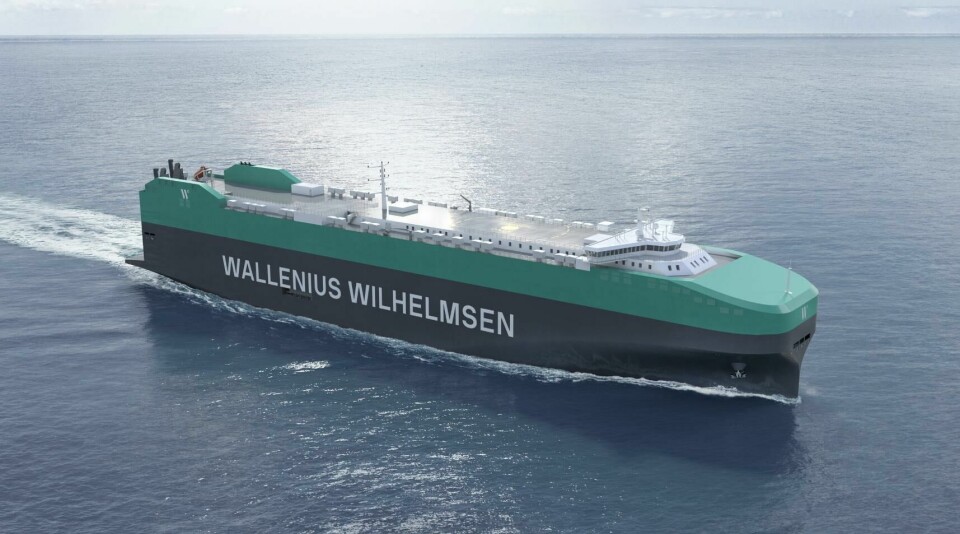
Wallenius Wilhelmsen secures sustainable capacity with PCTC orders
Wallenius Wilhelmsen has ordered four additional next-generation Shaper Class pure car and truck carrier (PCTC) vessels from Jinling Shipyard in China, bringing its total order to eight. The first of the Shaper Class vessels already ordered are expected to be delivered in the second half of 2026. The four additional vessels will be delivered between May and November 2027.
The 9,300 CEU methanol dual-fuel vessels can run on alternative fuel sources. They will be ammonia-ready and able to be converted as soon as ammonia becomes available in a safe and secure way, according to the logistics provider. It said the vessels will play a key role in the introduction of its net zero emissions service by 2027.
Wallenius Wilhelmsen now has eight Shaper Class PCTCs on order
“Together with our customers we are committed to further shaping our industry and accelerating towards net zero. These new vessels are a vital part of that journey,” added Xavier Leroi, executive vice-president and chief operating officer of shipping services at Wallenius Wilhelmsen.
Rebuilding ocean-going car carrier capacity at the same time as cutting transport emissions is currently a core focus for the automotive industry. Faced with a shortage of vessel capacity since the Covid pandemic, some carmakers have opted to charter their own vessels, as was given clear example by Ford Europe’s Martina Graser, director of material planning and logistics (MP&L), at the recent Automotive Logistics and Supply Chain Europe conference in Bonn, Germany. Volkswagen Group has also been chartering vessels for cross-Atlantic deliveries for some time and is using LNG-powered vessels to do so (including those from Siem Car Carriers). The benefits are an improved outbound flow with fewer port calls meaning less delay and better visibility on delivery to the end customer. However, the strategy has been criticised for taking capacity out of the network.